Ever wondered why your auto insurance rates in Massachusetts seem to have a personality of their own? Well, you’re not alone. Navigating the world of car insurance can feel like exploring a hidden labyrinth, with twists and turns at every corner. Buckle up, because in this guide, we’re about to unravel the enigma of auto insurance costs in the Bay State.
From understanding state regulations to exploring the factors that influence your premium, we’ve got a roadmap laid out for you. With insights into different types of coverage and tips to save on your policy, this guide is your one-stop-shop for mastering the art of auto insurance in Massachusetts. Let’s dive in!


Overview of Auto Insurance in Massachusetts
Ever wondered why auto insurance in Massachusetts is so unique? It’s not just about the infamous traffic or unpredictable weather. It’s about the rules that shape how you drive and how much you pay.
Massachusetts has a fascinating history when it comes to auto insurance. The state was among the first to mandate car insurance back in the 1920s. Fast forward to today, and the regulations still impact your wallet and your options.
General Requirements for Auto Insurance
Here’s the deal: if you’re hitting the road in Massachusetts, you must have auto insurance. It’s not just a suggestion — it’s the law. The state requires you to carry a minimum level of insurance to protect not only yourself but others on the road. This has been part of the legal landscape since the early 20th century, evolving over time to adapt to new challenges and technologies.
State Laws and Their Impact on Insurance Rates
State regulations heavily influence insurance costs. In Massachusetts, insurers use factors like your driving record, location, and even your credit score to calculate rates. BUT, thanks to state laws, they cannot use gender or marital status. This means you might find rates lower or higher than expected compared to other states.
Minimum Coverage Requirements
Let’s break it down: Massachusetts mandates the following minimum coverage levels. You need:
- Bodily Injury to Others: $20,000 per person / $40,000 per accident
- Personal Injury Protection (PIP): $8,000 per person
- Bodily Injury Caused by an Uninsured Auto: $20,000 per person / $40,000 per accident
- Property Damage: $5,000 per accident
Pro Tip: Always consider purchasing more than the minimum coverage. It can save you big time in the event of a serious accident.
Factors Influencing Auto Insurance Rates
Did you know that in Massachusetts, your auto insurance premium can fluctuate dramatically based on a few key factors? It’s true! And understanding these can save you a ton of money.
Let’s break down the main elements that dictate what you pay for auto insurance in the Bay State.
Driving History Impact
Your driving record is like your credit score for insurers. If you’ve been involved in accidents or received traffic violations, brace yourself for higher premiums. However, a clean record can mean significant savings.
Here’s the deal: insurers see a history of safe driving as a sign you’re less likely to file a claim. So, maintaining a spotless record is key.
Urban vs. Rural Locations
Where you live in Massachusetts plays a huge role in how much you pay. City dwellers, beware! Urban areas often see higher rates due to increased traffic, theft, and vandalism risks.
Rural locations usually enjoy lower premiums thanks to less congestion and crime. Check out this quick comparison:
| Location Type | Typical Rate Impact |
|---|---|
| Urban | Higher |
| Rural | Lower |
Vehicle Type and Insurance Pricing
The car you drive isn’t just a reflection of your style; it also affects your insurance costs. Luxury cars and sports models often come with higher premiums due to their expensive parts and repair costs.
Meanwhile, driving a reliable sedan or a family-friendly SUV might keep your rates more manageable. So, choose wisely when picking out your next ride.
Credit Scores and Premiums
Your credit score can be a silent partner in determining your insurance rate. A strong credit score can sometimes lower your premium because insurers see you as a financially responsible individual.
Pro Tip: Keep an eye on your credit report for inaccuracies to prevent unnecessary insurance costs.
Those with lower scores might find themselves paying more, so it’s worth working on improving your credit.
Types of Auto Insurance Coverage

Did you know that having the right auto insurance coverage can save you from financial turmoil? In Massachusetts, there are different types of auto insurance coverages you can choose from, each designed to protect you in unique ways.
Understanding these options is crucial, especially when it comes to navigating the state’s specific requirements and ensuring you’re fully covered. So let’s dive into the specifics.
Liability vs. Comprehensive Coverage
Liability coverage is mandatory in Massachusetts. It covers damages you cause to others in an accident. However, it won’t cover your own car or injuries. Comprehensive coverage, on the other hand, protects your vehicle from non-collision incidents like theft, fire, or natural disasters.
Here’s the deal: While liability coverage is the minimum requirement, comprehensive coverage gives you peace of mind knowing you’re protected against a wider array of risks.
Coverage Options Comparison
Let’s break down the different coverage options available and what they offer:
| Coverage Type | What It Covers | Benefits |
|---|---|---|
| Liability | Injuries and damages to others | Legal requirement, protects your assets |
| Comprehensive | Theft, vandalism, natural disasters | Extensive protection for your vehicle |
| Collision | Damages to your car from collisions | Helps repair or replace your vehicle |
| Personal Injury Protection (PIP) | Medical expenses and lost wages | Essential for covering personal injuries |
Importance of Personal Injury Protection
In Massachusetts, Personal Injury Protection (PIP) is a game-changer. It covers medical expenses and lost wages for you and your passengers, regardless of who caused the accident.
Pro Tip: PIP is crucial because it ensures immediate funds for medical expenses without waiting for fault determinations, making it an essential part of your coverage plan.
Cost-Saving Tips for Auto Insurance
Did you know that the average driver in Massachusetts spends over $1,300 a year on auto insurance? That’s a chunk of change! Luckily, there are ways to cut those costs without skimping on coverage.
In this guide, I’ll show you how to trim your auto insurance premiums down to size. From taking advantage of discounts to bundling your policies, these strategies will help you keep more money in your pocket.
Take Advantage of Discounts
Insurance companies love to reward safe drivers and smart shoppers. Many offer discounts that you might not even know about. Whether you’re a student, have a clean driving record, or have safety features in your car, there’s likely a discount waiting for you.
- Good Driver Discount: Keep that record clean and save up to 20%.
- Multi-Car Discount: Insure more than one vehicle and see the savings stack up.
- Anti-Theft Discount: Equip your car with anti-theft devices for added savings.
Pro Tip: Ask your insurer about any and all discounts. It never hurts to ask!
Bundle Your Policies
Bundling isn’t just for cable bills. If you also need homeowners or renters insurance, consider getting all your policies from the same provider. Not only does this simplify your bills, but it can also lead to some serious discounts on premiums.
Here’s the deal: many insurers offer a bundling discount that can reduce your premium by up to 15%. That’s significant!
Increase Your Deductible
One simple way to lower your monthly premium is to increase your deductible. Yes, you’ll pay more out-of-pocket if you get into an accident. BUT, if you’re a safe driver, this can be a smart move that reduces your annual insurance costs.
| Deductible | Premium Reduction |
|---|---|
| $500 | Standard Rate |
| $1,000 | Up to 10% off |
| $1,500 | Up to 15% off |
Maintain a Good Driving Record
Here’s a no-brainer: insurance is all about risk assessment. Stay accident-free, and you’ll be rewarded with lower rates. It’s that simple. BUT, keeping a clean driving record might take some effort.
Avoid speeding tickets and other traffic violations because they can hike your rates up by a hefty margin. Drive safely, and you’ll see the savings add up over time.
Pro Tip: Consider defensive driving courses. Some insurers offer discounts for completing them.
Comparing Auto Insurance Providers
Did you know that choosing the right auto insurance provider could save you hundreds of dollars every year? Picking the right company isn’t just about the price tag—service quality and customer satisfaction are key.
Here’s the deal: Massachusetts hosts a variety of auto insurance companies, each promising the best rates and customer service. To make the right choice, it’s essential to compare their offerings systematically. Let’s break it down.
Major Auto Insurance Companies Comparison
When it comes to auto insurance in Massachusetts, some names stand out from the crowd along with their varying features and pricing.
| Company | Average Annual Premium | Customer Rating |
|---|---|---|
| Geico | $1,200 | 4.5/5 |
| Progressive | $1,320 | 4.3/5 |
| State Farm | $1,400 | 4.6/5 |
| Allstate | $1,450 | 4.2/5 |
| Liberty Mutual | $1,500 | 4.1/5 |
Customer Service Reputation of Top Insurance Providers
Ever got stuck with a claim process that felt like pulling teeth? The customer service reputation of an auto insurance provider is crucial. Geico and State Farm shine brightly in customer satisfaction, frequently praised for their rapid response times and helpful representatives. But, some companies like Liberty Mutual have room for improvement according to reviews.
Most Competitive Insurance Companies in Terms of Pricing
If you’re hunting for the best deal, Geico and Progressive are your best bets in Massachusetts. They consistently offer competitive pricing that undercuts many rivals. State Farm might come in a bit higher, but their customer service reputation often justifies the price difference.
Analysis of Customer Reviews and Satisfaction Ratings
Let’s dive into what customers are really saying. Across the board, Geico scores high for delivering value, while State Farm wins for reliability and service. Customer reviews reveal that Allstate tends to have mixed feedback due to variable experiences, whereas Progressive often garners positive comments for its cost-effectiveness.
Pro Tip: Always check the latest customer reviews online before making your decision. They can reveal insights that numbers alone can’t.
Recent Trends and Changes in Auto Insurance
Did you know that auto insurance rates in Massachusetts are on the rise? It’s true. But why is this happening, and what can you do about it?
Insurance companies are adjusting their rates based on a variety of factors. Things like new technology, legislative changes, and even environmental concerns are all shaking things up.
Impact of Emerging Technologies on Insurance
One of the biggest game-changers in auto insurance today is telematics. This technology allows insurers to track your driving habits using a small device in your car or an app on your phone.
The idea here is simple: safer drivers should pay less. If you’re a cautious driver, you might see a nice discount on your premiums. BUT, if you’re prone to hard braking or speeding, you might end up paying more.
Pro Tip: Consider opting into telematics-based insurance plans if you’re a good driver. It could save you a bundle.
The Influence of Legislative Changes
Massachusetts laws are always evolving, and this can directly impact your insurance rates. Recent legislative changes aim to make insurance more equitable, but they can also lead to rate hikes for some drivers.
For instance, new laws that require insurers to offer more inclusive coverage options can increase operational costs, which might be passed down to you. Here is the deal: staying informed about these changes is crucial to anticipate how they might affect your insurance bill.
Environmental Factors Shaping Insurance Policies
Climate change is more than just a buzzword; it’s impacting insurance policies, too. With more extreme weather events in Massachusetts, insurers are adjusting their risk assessments.
This means your location and even your choice of vehicle could play a bigger role in determining your rates. Floods, hurricanes, and snowstorms aren’t just inconvenient—they’re expensive for insurance companies, and those costs often get passed on to you.
Pro Tip: If you live in an area prone to severe weather, consider comprehensive coverage. It might cost more upfront, but it could save you big in the event of a disaster.
Last Word
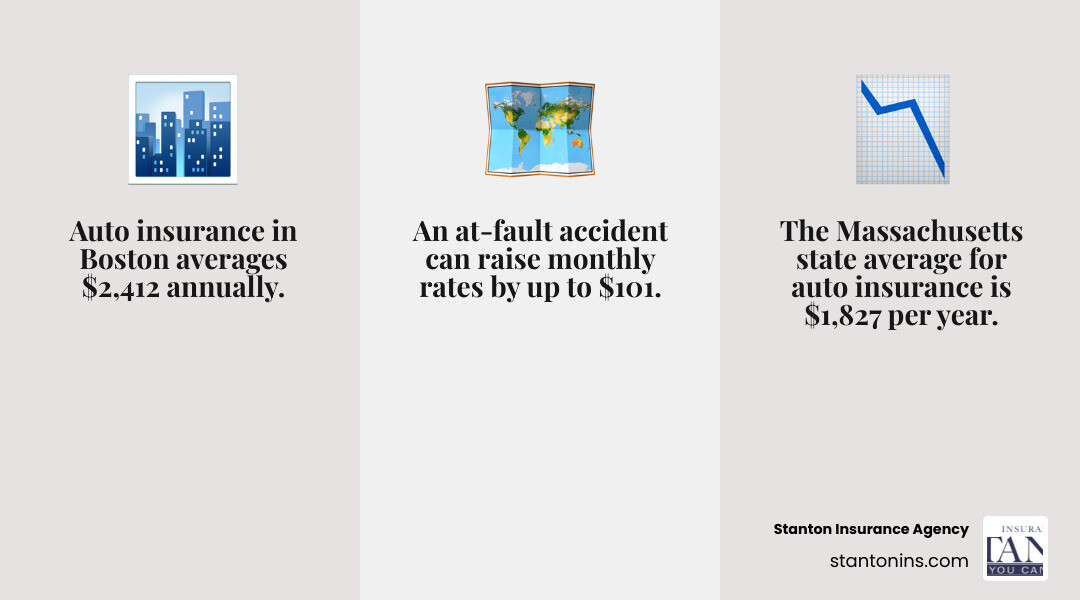
So there you have it—a deep dive into the world of auto insurance costs in Massachusetts. Whether you’re a city dweller or cruising through the countryside, understanding these factors can help you navigate the road to the best policy. Remember, a well-informed driver is a savvy spender. Keep these insights in your back pocket, and you’ll be well-equipped to steer towards savings.
FAQ Section
What are the minimum auto insurance requirements in Massachusetts?
The state mandates a minimum coverage that includes bodily injury, property damage liability, personal injury protection, and uninsured motorist coverage.
How does my driving history affect my insurance rate?
A clean driving record can significantly lower your premiums, while accidents and violations may increase your insurance costs.
Does living in an urban area increase my auto insurance premiums?
Typically, yes. Urban areas often have higher rates due to increased traffic and accident risk compared to rural areas.
Can my credit score impact my auto insurance rate in Massachusetts?
While some states consider credit scores, Massachusetts insurers primarily assess other factors such as driving history and location.
What discounts are commonly offered by auto insurance companies?
Discounts may include safe driver discounts, multi-policy discounts, and discounts for having safety features in your vehicle.