Small businesses often walk a tightrope of risks, and without a safety net, one misstep can lead to a fall. That’s where small business insurance swoops in like a superhero, providing protection against the unpredictable. If you’re a small business owner, understanding insurance isn’t just smart—it’s essential for keeping your business safe and secure.
Imagine running your business without having to worry about unexpected disasters or legal snags. With the right small business insurance, you can focus on growth and innovation while your insurance policy handles the headaches. In this guide, we’ll break down key insurance types, costs, and benefits with the precision and simplicity of a Backlinko article, making it easy for you to make informed decisions.

Overview of Small Business Insurance
Did you know that 40% of small businesses will experience a property or liability loss within the next ten years? That’s a huge risk that could sink your business. The solution? Insurance.
Here’s the deal: Small business insurance isn’t just a safety net. It’s a lifeline. It guards you against unforeseen circumstances that can cripple your operations. From lawsuits to natural disasters, having the right insurance can make or break your business.
Common Risks Covered by Business Insurance
Think about it. Your business faces risks every single day. Whether it’s a customer slipping in your store or a data breach that exposes client information, the threats are real. Business insurance covers these risks and more, ensuring that you’re not left vulnerable.
- Property Damage
- Liability Issues
- Employee Injuries
- Data Breaches
Types of Small Business Insurance Policies
Not sure which policies you need? Let’s break it down:
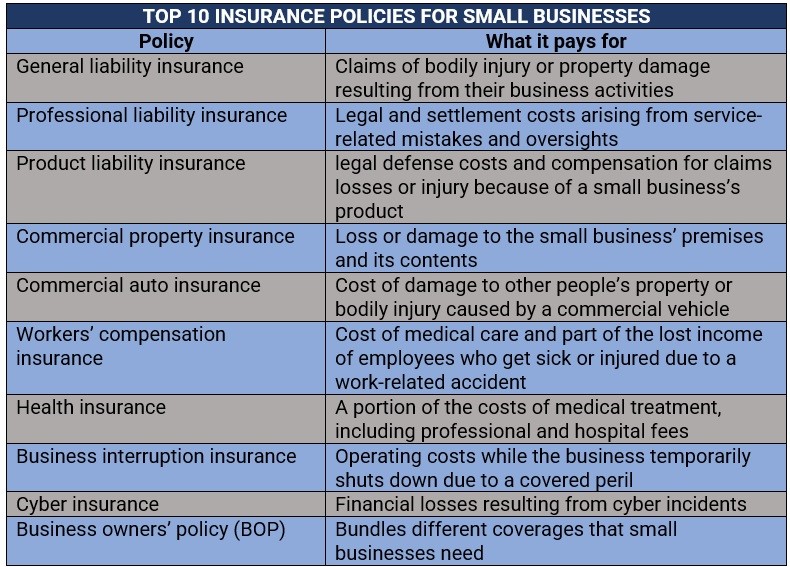
- General Liability Insurance: Protects against lawsuits from injuries or property damage.
- Commercial Property Insurance: Covers damages to your business property.
- Workers’ Compensation Insurance: Required in most states, it covers employee injuries.
- Professional Liability Insurance: Guards against claims of negligence or mistakes.
The Role of Insurance in Business Continuity Planning
Business continuity planning without insurance is like a ship without a lifeboat. You need it to weather the storm. Insurance ensures that you can keep your doors open, even when disaster strikes.
Pro Tip: Integrate your insurance policies into your business continuity plan to identify potential coverage gaps.
A strong insurance plan supports your business continuity by providing the financial resources needed to recover and rebuild after an unexpected event. Don’t let your business fumble in the face of adversity.
Types of Small Business Insurance
Did you know that 40% of small businesses are underinsured? That’s risky. Let’s dive into the world of small business insurance to ensure you’re covered.
There are several types of insurance policies tailored for small businesses. But with so many choices, it can be overwhelming. Here’s the deal: you need to understand which policies suit your industry and business model.
Key Insurance Options for Small Businesses
First up, let’s break down the various types of insurance available. The goal is to make sure you have a comprehensive safety net.
| Insurance Type | Coverage | Typical Cost | Benefits |
|---|---|---|---|
| General Liability Insurance | Third-party bodily injury, property damage | $400-$1,000 annually | Protects against most common risks |
| Professional Liability Insurance | Negligence, misrepresentation claims | $600-$1,800 annually | Covers service errors |
| Workers’ Compensation | Employee injury/illness | Varies by state | Legal requirement in most states |
| Commercial Property Insurance | Fire, theft, vandalism | $500-$3,000 annually | Safeguards business assets |
Essential Coverages by Industry
Different industries have unique risks, which means their insurance needs differ too.
- Retail: Emphasize General Liability and Commercial Property Insurance.
- Professional Services: Focus on Professional Liability Insurance.
- Manufacturing: Don’t skip Workers’ Compensation and Equipment Breakdown Insurance.
Pro Tip: Tailor your insurance package to match your specific industry risks.
General Liability vs. Professional Liability
Here’s a common question: “Do I need both General and Professional Liability Insurance?”
General Liability covers physical risks, like someone slipping in your store. But Professional Liability steps in when your expertise or advice is questioned. If you provide a service or consultancy, you might need both.
Cost Factors in Small Business Insurance
Ever wondered why your insurance premiums seem high? Understanding what drives these costs can help you take control. Let’s dive into the factors that can make or break your insurance budget.
Insurance premiums aren’t just random numbers. They’re carefully calculated based on a variety of factors that assess the risk level of your business. Knowing these factors can give you the upper hand and potentially save you a significant amount of money.
Key Factors That Influence Insurance Costs
Here is the deal: the cost of your insurance is heavily influenced by certain key factors. These include the type of business, location, claims history, and coverage limits. Each of these factors has its own impact on how much you end up paying.
| Factor | Description | Impact on Cost | Example |
|---|---|---|---|
| Type of Business | The industry you’re in can affect risk levels. | High-risk industries pay more. | A construction company vs. a retail store. |
| Location | Where your business operates can influence risk. | Areas prone to natural disasters pay more. | A coastal area vs. an inland city. |
| Claims History | Your past insurance claims affect future rates. | More claims lead to higher premiums. | A history of fire claims. |
| Coverage Limits | The amount of coverage you choose impacts cost. | Higher limits mean higher premiums. | $1M coverage vs. $500K coverage. |
Importance of Risk Assessment in Premium Calculation
Risk assessment is the insurance company’s crystal ball. They use it to predict the likelihood of you making a claim. By evaluating different risk factors, they determine your insurance premium. If you want to lower your costs, you need to understand how your risk is assessed.
Pro Tip: Conduct your own risk assessments regularly. Identifying potential risks can help you take proactive measures to mitigate them.
Methods to Reduce Small Business Insurance Costs
BUT how do you actually bring those costs down? Here are a few strategies you can implement right away. First, consider bundling your policies. Insurers often give discounts when you purchase multiple types of coverage. Second, improve your business’s safety protocols to reduce risks, which can lead to lower premiums. Finally, review your coverage limits regularly and adjust them according to your current needs.
- Bundle policies for discounts.
- Enhance safety measures to lower risk.
- Regularly reassess coverage needs.
Legal Requirements for Small Business Insurance
Did you know that failing to comply with insurance laws can shut down your business faster than a bad Yelp review? That’s right. Getting your insurance ducks in a row isn’t just smart—it’s legally essential.
Here’s the deal: Every state has its own set of insurance rules that small businesses need to follow. Some require you to have workers’ compensation, while others might mandate liability insurance. The key is knowing what’s required where you operate.
State-Specific Insurance Requirements
Let’s break it down. In California, businesses with even one employee must have workers’ compensation insurance. Not complying can lead to a hefty fine. Meanwhile, New York requires disability benefits insurance on top of workers’ comp. These are not optional—they’re the law. But here’s where things get tricky: not every state has the same rules.
How do you keep track of all this? Pro Tip: Use state government websites to find the most accurate and up-to-date insurance requirements.
Staying Compliant with Insurance Regulations
Compliance isn’t just about buying the right policy—it’s a continuous process. Step #1: Regularly review and update your insurance policies to match any changes in your business operations or state laws. Step #2: Keep all your insurance documents organized and easily accessible. Step #3: Work closely with an experienced insurance agent who understands the specific needs of your industry and location.
Important Legal Terms: “Workers’ Compensation” – Coverage for employees injured on the job. “General Liability” – Protection against third-party injuries or property damage. “Disability Benefits” – Payments to employees who are unable to work due to non-job-related injuries or illnesses.
Benefits of Small Business Insurance

Did you know that 40% of small businesses never reopen after a disaster? That’s a staggering number, but here’s where small business insurance comes in to save the day.
Small business insurance is not just a legal necessity—it’s your financial safety net. It shields you from unexpected costs, like lawsuits and property damage, ensuring that your business doesn’t just survive, but thrives.
Financial Protection
Imagine a sudden fire or a customer injury on your premises. Without insurance, the financial hit could be catastrophic. But with comprehensive coverage, you’re protected from these unforeseen expenses. Step #1: Assess your risks and choose policies that align with your business needs.
Enhanced Business Credibility
Insurance isn’t just for protection; it boosts your business’s credibility. When clients see that you’re insured, they know you’re serious and professional. This perception can be a game-changer in attracting high-profile clients who insist on working with secure and responsible companies.
Attracting Customers and Investors
Want to entice more customers or investors? Insurance can be your secret weapon. Investors are more likely to fund a business that’s secured against risks, and customers prefer dealing with businesses that are prepared for the unexpected. Step #2: Use your insurance status as a marketing tool to build trust and confidence.
Peace of Mind
Running a business is stressful enough without the added worry of potential disasters. Small business insurance provides peace of mind, freeing you to focus on what truly matters—growing your business.
Pro Tip: Regularly review your coverage to ensure it meets your evolving business needs.
Selecting an Insurance Provider
Did you know that choosing the wrong insurance provider can cost your small business thousands of dollars? It’s crucial to make the right choice to protect your investment and your peace of mind. But how do you sift through the noise and find the right fit?
Here’s the deal: selecting the perfect insurance provider isn’t just about picking the cheapest option. You need to consider coverage options, customer service, and reputation. Let’s break this down step-by-step.
Steps to Choose the Right Provider
Step #1: Research, research, research. Start by gathering a list of potential providers tailored specifically for small businesses. This can be your local agents or larger companies online. Look for specialized providers who understand your industry.
Step #2: Compare quotes and services. Don’t settle for the first quote you receive. Use an online comparison tool to gather multiple quotes. Look beyond the price and evaluate the services and coverage each provider offers.
Step #3: Check reviews and references. Customer reviews can provide valuable insights into an insurer’s reliability and customer service. Make sure to check online reviews and ask for references.
The Importance of Comparing Quotes
When you compare, you’re not just looking for the best price. You’re ensuring you get the most comprehensive coverage for your budget. It might surprise you how much the same coverage can vary in cost between providers.
| Provider Name | Coverage Options | Customer Reviews | Pricing |
|---|---|---|---|
| Provider A | Basic, Premium, Custom | 4.5/5 | $$$ |
| Provider B | Standard, Extended | 4/5 | $$ |
| Provider C | Basic, Premium | 3.5/5 | $ |
Questions to Consider
Ready to dive deeper? Here are a few questions you should ask before making your final decision:
- What specific coverages are included in the policy?
- Are there any exclusions I should be aware of?
- What is the claim process like? Is it simple and straightforward?
- How is customer service handled? Is there 24/7 support available?
- Can the provider customize policies to better fit my unique business needs?
Pro Tip: Don’t be afraid to ask hard questions. A reputable provider will welcome your inquiries, as it shows you’re serious about protecting your business.
Summary
When it comes to running a small business, having the right insurance is like having a reliable co-pilot. It steers you clear of financial turbulence and keeps your journey smooth. With the insights and strategies we’ve covered, you’re now equipped to choose insurance that not only protects but also propels your business forward. Remember, peace of mind is just a policy away.
Common Queries
What are the most crucial types of small business insurance?
General liability, professional liability, and property insurance are among the most essential for many small businesses.
How does insurance enhance a business’s credibility?
Insurance shows customers and investors that a business is responsible and prepared for potential risks, building trust and credibility.
What factors influence the cost of small business insurance premiums?
Factors include the type of business, location, coverage limits, and claims history.
Why is risk assessment important for insurance premiums?
Risk assessment helps insurers determine the likelihood of a claim, influencing the cost and terms of the insurance policy.
How can small businesses reduce their insurance costs?
Businesses can reduce costs by bundling policies, increasing deductibles, and implementing risk management practices.
What are the legal insurance requirements for small businesses?
Requirements vary by state and industry, but workers’ compensation and unemployment insurance are commonly mandated.